
Step 4 - Impact assessment#
To characterize the time-explicit inventory, we have two options: Static and dynamic life cycle impact assessment (LCIA).
Static LCIA#
If we don’t care about the timing of the emissions, we can do static LCIA using the standard characterization factors. To characterize the inventory with the impact assessment method that we initially chose when creating our TimexLCA object, we can simply call:
tlca.static_lcia()
and investigate the resulting score like this:
print(tlca.static_score)
Dynamic LCIA#
The inventory calculated by a TimexLCA retains the temporal information of the biosphere flows. That means that in addition to knowing which process emits what substance, we also know the timing of each emission. This allows for more advanced, dynamic characterization using characterization functions instead of just factors. In bw_timex, users can either use their own custom functions or use some existing ones, e.g., from the package dynamic_characterization. We’ll do the latter here.
First, we need to assign characterizations function to our biosphere flows:
from dynamic_characterization.ipcc_ar6 import characterize_co2
emission_id = bd.get_activity(("biosphere", "CO2")).id

characterization_functions = {
    emission_id: characterize_co2,
}
So, let’s characterize our inventory. As a metric we choose radiative forcing, and a time horizon of 100 years:
tlca.dynamic_lcia(
    metric="radiative_forcing",
    time_horizon=100,
    characterization_functions=characterization_functions,
)
This returns the (dynamic) characterized inventory, which shows you the radiative forcing [W/m2] by the CO2 emissions in the system over the next 100 years:
date |
amount |
flow |
activity |
|---|---|---|---|
2023-01-01 |
1.512067e-14 |
1 |
5 |
2024-01-01 |
1.419411e-14 |
1 |
5 |
2024-12-31 |
2.322610e-14 |
1 |
6 |
2024-12-31 |
4.941608e-15 |
1 |
7 |
2024-12-31 |
1.343660e-14 |
1 |
5 |
… |
… |
… |
… |
2124-01-01 |
1.400972e-15 |
1 |
7 |
2124-01-01 |
3.302104e-15 |
1 |
8 |
2124-12-31 |
3.294094e-15 |
1 |
8 |
2125-12-31 |
3.286213e-15 |
1 |
8 |
2127-01-01 |
3.278458e-15 |
1 |
8 |
To visualize what’s going on, we can conveniently plot it with:
tlca.plot_dynamic_characterized_inventory()
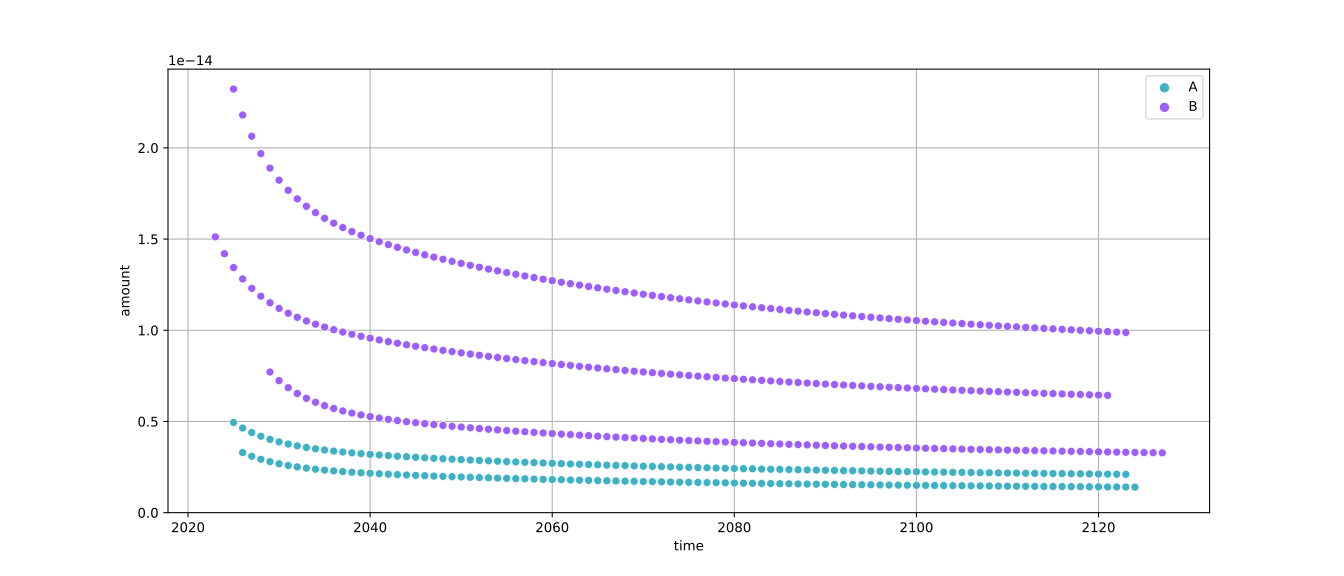
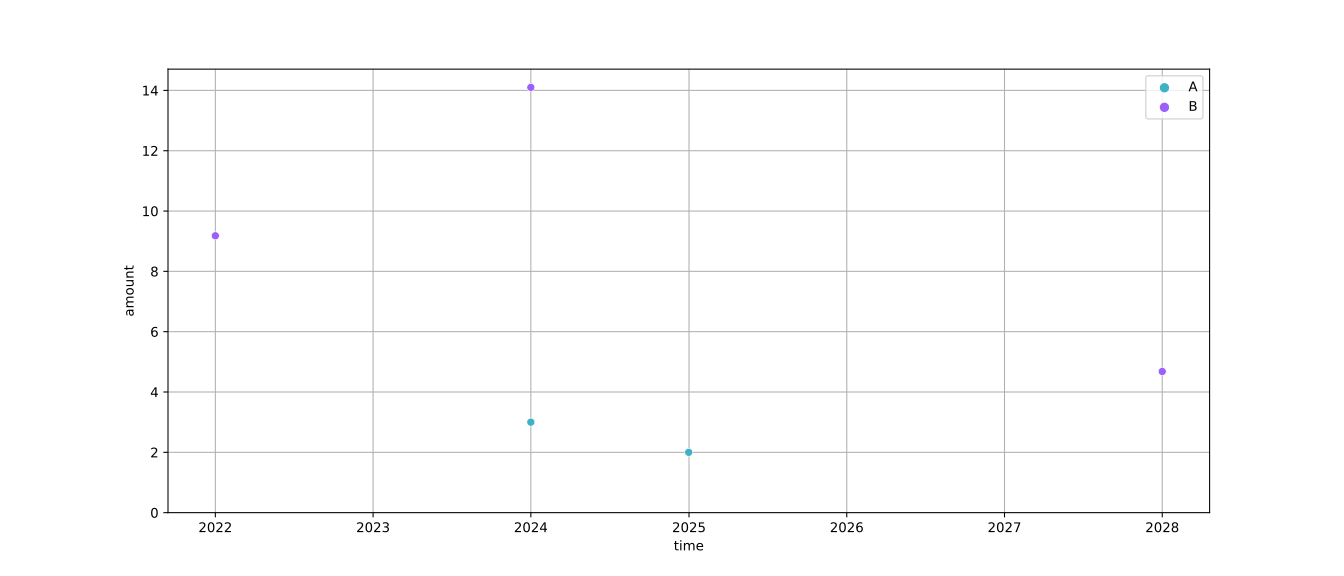
Of course we can also assess the “standard” climate change metric Global Warming Potential (GWP):
tlca.dynamic_lcia(
    metric="GWP",
    time_horizon=100,
    characterization_functions=characterization_functions,
)
date |
amount |
flow |
activity |
|---|---|---|---|
2022-01-01 |
9.179606 |
1 |
5 |
2024-01-01 |
14.100328 |
1 |
6 |
2024-01-01 |
3.000000 |
1 |
7 |
2025-01-01 |
2.000000 |
1 |
7 |
2028-01-01 |
4.680263 |
1 |
8 |
… and plot it:
tlca.plot_dynamic_characterized_inventory()
For most of the functions we used here, there are numerous optional arguments and settings you can tweak. We explore some of them in our other Examples, but when in doubt check out our docstrings, which provide information also for the more advanced settings - so please browse through them as needed ☀️